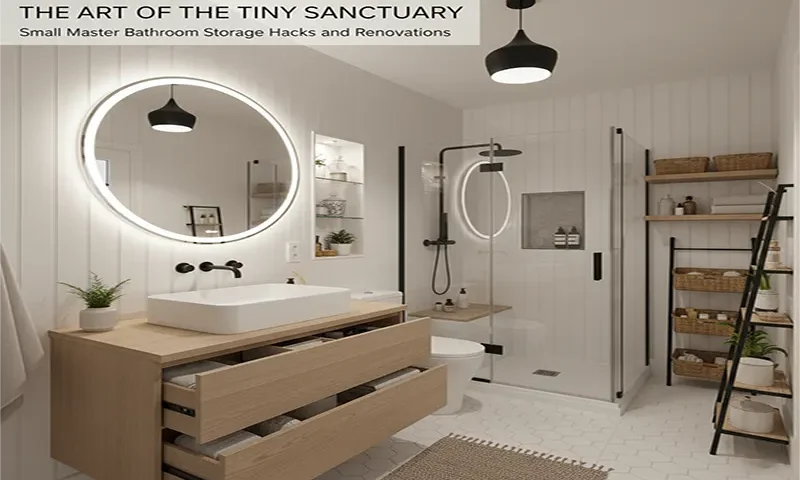

The Art of the Tiny Sanctuary: Small Master Bathroom Storage Hacks and Renovations

A master bathroom should be your personal sanctuary—a place to decompress. However, the “Small Master Bathroom Paradox” often turns this space into a stressful, cluttered closet. The good news? You don’t need more square footage to create a spa-like experience; you simply need more intentionality. By shifting to a philosophy of “curated minimalism,” where every inch is optimized, even the most cramped bathroom can feel expansive and luxurious.

1. The “Hacker’s” Toolkit: Immediate Upgrades

You don’t have to pick up a sledgehammer to start reclaiming your space. These non-structural hacks focus on reclaiming “dead zones.”

  • Vertical Expansion: The most underutilized real estate in any bathroom is the wall space above the toilet and vanity. Use high-end, wall-mounted floating shelves that match your trim, or look for over-the-toilet units with closed cabinetry to hide clutter.
  • Recessed “Niche” Storage: Don’t stop at the shower. Identify areas between wall studs—often found in vanity backsplashes or near the entry—and install recessed, framed shelving.
  • Door and Dead-Space Optimization: The back of your master bathroom door is a prime spot for a heavy-duty, decorative hook rail for robes. Inside the vanity, utilize the door itself for shallow organizers—perfect for hair tools or makeup brushes.
  • Countertop De-cluttering: The goal is to keep the counter as clear as possible. Consider installing a wall-mounted faucet, which can save up to 4 inches of counter depth, and mount your toothbrush and soap dispensers directly to the wall or mirror surround.

2. Strategic Renovation Moves

When you are ready for a … READ MORE >>>

Bridging Eras: Elegant Victorian Restoration and Modernizing Strategies

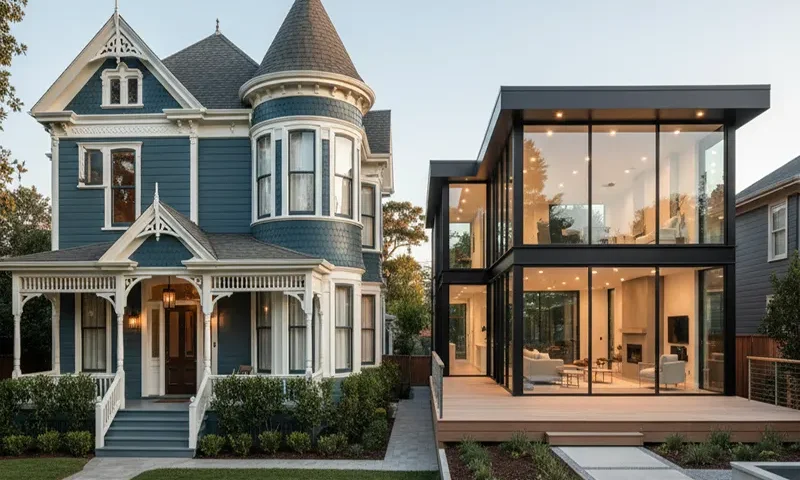
Restoring a Victorian-era home—whether a Queen Anne, an Italianate, or a Gothic Revival—is an act of stewardship. These homes were designed for a social era defined by servant-led households, isolated kitchens, and labor-intensive domesticity. Modernizing them for 2026 living requires a delicate philosophy: “Respectful Modernism.” The goal is to ensure your home performs like a 21st-century asset while retaining the architectural soul that made you fall in love with it in the first place.

The Envelope & Efficiency

Victorian homes are notorious for being “leaky.” While modern codes favor air-tight construction, historic homes were built to “breathe” through their porous materials.

The biggest mistake is applying modern, rigid spray foam to historic walls, which can trap moisture and cause the framing to rot from the inside out. Instead, look for dense-pack cellulose insulation, which allows for a degree of vapor permeability while significantly boosting thermal performance.

Regarding windows, avoid the urge to replace original old-growth wood sashes with plastic. Original glass has a unique “wavy” character that cannot be replicated. Instead, restore the original sashes and install high-quality, custom interior storm window inserts. They are invisible from the street, highly energy-efficient, and preserve the original window frame.

The Kitchen & Bath Dilemma

Victorian kitchens were originally utility spaces, often tucked away, small, and dark. Bringing them into the modern era requires a design that respects the past while optimizing for contemporary chefs.

  • Kitchens: Favor “furniture-style” cabinetry that sits on legs or has toe-kicks that mimic baseboards, making the
READ MORE >>>
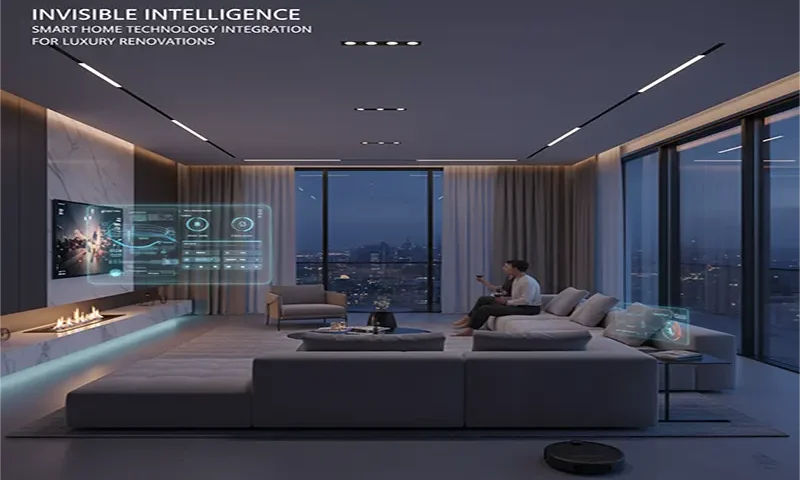
Invisible Intelligence: Smart Home Technology Integration for Luxury Renovations

In the landscape of modern luxury living, true sophistication is no longer defined by the presence of technology, but by its absence. A high-end smart home should feel like a butler who is always present but never intrusive—a residence that anticipates your needs, secures your perimeter, and curates your environment with silent, invisible efficiency.

In 2026, luxury smart home integration has evolved beyond simple remote control. It is now about creating a cohesive, “invisible” ecosystem that elevates your lifestyle while maintaining the pristine aesthetic of your interior design.

The Foundation: Network & Infrastructure

Behind every “magical” automation is a rigorous technical backbone. In a luxury renovation, the network is the most critical infrastructure, ranking in importance alongside plumbing and electrical.

For a residence of this caliber, a standard ISP-provided router is insufficient. You require an enterprise-grade network—often featuring a fiber-optic backbone and a Wi-Fi 7 mesh system—to ensure zero-latency performance. Because smart homes now rely on a variety of low-power protocols like Thread and Matter, your integrator must plan for a robust network that can handle hundreds of devices simultaneously without compromising security. Cybersecurity is no longer an “option”—it is baked into the network architecture, protecting your digital life from external threats.

Seamless Integration: Beyond the App

The hallmark of a luxury smart home is that you shouldn’t need an app to “run” your house. The technology should be embedded into the very fabric of the building.

  • Human-Centric Lighting: Forget manual dimmers. Modern luxury homes utilize circadian-rhythm lighting that
READ MORE >>>
The Horizontal Flow: Modern Open-Concept Layout Ideas for Ranch Homes

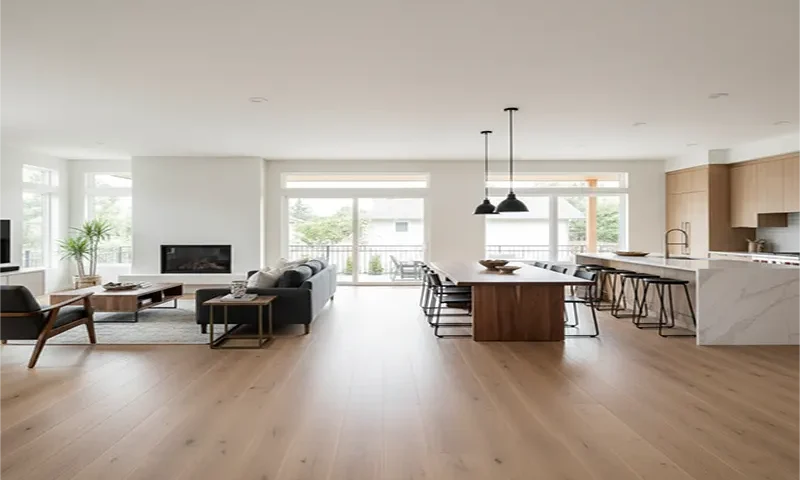
The ranch-style home is the unsung hero of modern residential architecture. With its single-story footprint and emphasis on horizontal lines, it is arguably the best architectural canvas for open-concept living. While early ranch designs often featured choppy, isolated rooms—a product of the 1950s—the 2026 design philosophy is breathing new life into these structures by embracing “warm minimalism” and intentional, fluid layouts.

The goal today isn’t to create a vast, sterile box; it is to maximize the ranch’s innate sense of connection to the land while creating a home that feels curated, textured, and deeply approachable.

Architectural Advantages: Why Ranches Excel

The ranch’s greatest strength is its simplicity. Because it is a single-level home, there are fewer structural constraints—like staircases or complex multi-story load-bearing points—that limit where you can open up a floor plan.

The horizontal length of a ranch allows for a linear flow that is inherently intuitive. When you remove non-load-bearing walls between the kitchen, dining, and living areas, you aren’t just gaining square footage; you are honoring the original design’s horizontal nature. The key is right-sizing the opening. Instead of removing every partition, focus on creating clear “sightlines” from the front entrance through to the rear windows, which anchors the space in natural light.

Zoning Without Walls

In an open ranch plan, the challenge is preventing the space from feeling like a vast, undefined void. You must define zones through subtle design cues rather than physical barriers.

1. Furniture Anchoring

Your furniture should do the heavy lifting of … READ MORE >>>

Elevating the Underground: Modern Farmhouse Basement Finishing Design Concepts

For many homeowners, the basement is the final frontier—a storage graveyard of holiday decor and unfinished projects. However, the basement holds the highest potential for adding square footage and value to your home. In 2026, the Modern Farmhouse aesthetic remains the gold standard for these spaces. Why? Because it strikes the perfect balance between the warmth of a rustic retreat and the crisp, clean lines of contemporary design, ensuring your subterranean level feels like a curated extension of your main floor rather than an afterthought.

The key to a successful modern farmhouse basement is intentionality. We aren’t looking for “country kitsch” here; we are aiming for a sophisticated, airy, and functional living space that elevates the home’s overall character.

The Material Palette: Mixing Rustic and Refined

A modern farmhouse basement lives or dies by its textures. The goal is to introduce natural, aged elements while grounding them in modern finishes to prevent the space from feeling dark or dated.

  • Rustic Textures: Use reclaimed wood sparingly. Instead of covering every wall, limit wood to a single feature wall or as ceiling beams to add architectural interest. Shiplap, when used, should be installed horizontally with tight gaps, painted in crisp white or soft greige, to provide clean lines.
  • Modern Contrasts: This is where the “modern” half of the aesthetic takes over. Incorporate matte black hardware on doors and cabinetry to provide a sharp, graphic contrast to white shiplap. For countertops, opt for honed soapstone or white quartz to keep the look clean.
READ MORE >>>