
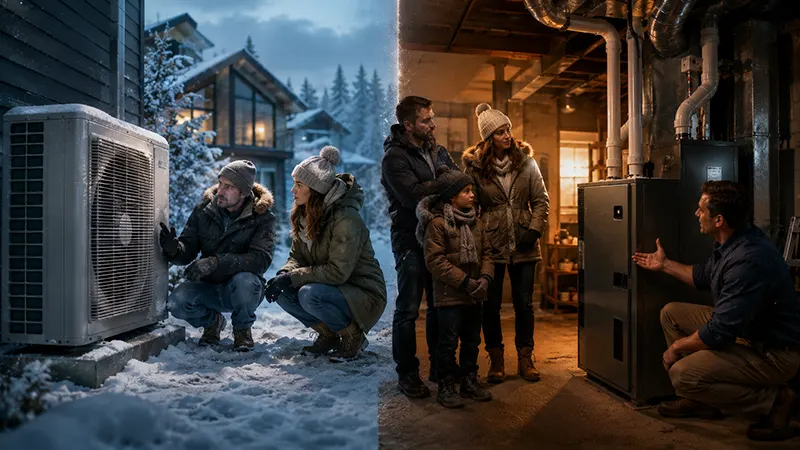
Deciding between a heat pump and a furnace when winter temperatures plunge can feel overwhelming. While gas furnaces deliver steady, high-heat warmth during extreme freezes, cold-climate heat pumps have made massive efficiency gains. Discover which system delivers the best comfort, efficiency, and long-term energy savings for your freezing winter climate.
When freezing temperatures arrive, maintaining a warm and comfortable home becomes your top priority. Choosing between a heat pump and a traditional furnace is one of the most critical decisions for your winter heating bills and indoor comfort. Both systems offer unique benefits, but sub-freezing weather tests their limits in very different ways. While modern technology has transformed heat pump performance, furnaces remain a proven powerhouse for intense cold. If you need expert guidance on upgrading your home comfort, scheduling a professional heating service near Webster, NY can clarify your best options before cold weather peaks.
Understanding How Heat Pumps and Furnaces Work in Extreme Cold
Heat Pumps: Efficiency Through Heat Transfer
Heat pumps do not create heat directly; instead, they extract latent heat from the outdoor air and transfer it inside your home. Modern cold-climate heat pumps utilize variable-speed inverter technology and advanced refrigerants, allowing them to extract warmth efficiently even when outdoor temperatures fall well below freezing.
Furnaces: Direct Heat Generation
Gas and electric furnaces generate heat directly through fuel combustion or electrical heating elements. Their core operational characteristics include:
- Generating high-temperature airflow rapidly, regardless of outdoor weather conditions.
- Operating independently of outdoor ambient temperatures and humidity levels.
- Utilizing natural gas, propane, or electricity to warm indoor air consistently.
Quick Comparison: Heat Pump vs. Furnace at a Glance
| Feature | Heat Pump | Furnace |
| How It Works | Moves existing heat from outside air into your home. | Creates new heat by burning gas or using electric coils. |
| Freezing Weather Performance | Highly efficient down to ~20°F (cold-climate models down to -15°F), but output decreases in extreme cold. | Consistently produces intense, powerful heat regardless of how cold it gets outside. |
| Efficiency | 200%–300%+ in mild cold (transfers more energy than it consumes). | 80%–98% AFUE (steady fuel-to-heat conversion). |
| Functionality | 2-in-1 system: Heats in winter and cools in summer. | Heating only: Requires a separate AC unit for summer cooling. |
Comparing Efficiency and Performance in Freezing Weather
Efficiency in winter HVAC equipment is measured by AFUE (Annual Fuel Utilization Efficiency) for furnaces and HSPF2 (Heating Seasonal Performance Factor) for heat pumps. A modern high-efficiency furnace achieves up to 98% AFUE, meaning nearly all consumed fuel converts directly into heat. In contrast, heat pumps can reach efficiency levels exceeding 200% to 300% in mild cold because transferring heat requires far less energy than creating it from scratch.
The Temperature Balance Point
As outdoor temperatures fall below freezing, a heat pump’s heating capacity gradually decreases. Key efficiency factors to keep in mind include:
- The balance point typically occurs between 20°F and 30°F, where heat output matches household heat loss.
- Auxiliary electric heating elements or secondary heat sources automatically assist when temperatures drop below the balance point.
- Advanced cold-climate models maintain near-full heating capacity at temperatures as low as 5°F.
Dual-Fuel Systems: The Best of Both Worlds
For regions that experience harsh winter conditions, a dual-fuel system combines an electric heat pump with a gas furnace. The system automatically runs the heat pump during moderate winter days for maximum energy savings, then switches seamlessly to the furnace when deep freezing sets in. Consulting a qualified technician for a heating service near Webster, NY ensures your dual-fuel control settings are optimized for seasonal performance.
4. Actionable Tips to Maximize Winter Heating Efficiency
Regardless of which heating system warms your home, proactive maintenance strategies ensure peak efficiency throughout the winter months:
- Install a smart programmable thermostat to manage temperature setpoints and auxiliary heat triggers.
- Seal air leaks around doors, windows, and ductwork to prevent heat loss through your building structure.
- Schedule annual preventative maintenance tune-ups before freezing weather arrives.
- Inspect and replace air filters monthly to ensure unrestricted airflow and reduce system strain.
FAQs
1. Can a heat pump warm a home when temperatures fall below zero?
Yes, modern cold-climate heat pumps are specifically engineered to operate efficiently at outdoor temperatures as low as -15°F using advanced variable-speed compressors.
2. Is a heat pump cheaper to operate than a gas furnace in freezing weather?
In moderate winter temperatures, a heat pump costs significantly less to run. However, during severe freezing weather, natural gas furnaces often become more economical depending on local utility rates.
3. What is a hybrid dual-fuel heating system?
A hybrid dual-fuel system pairs an electric heat pump with a gas furnace, automatically selecting the most efficient heating source based on real-time outdoor temperatures.
4. Do heat pumps require backup heating in cold climates?
Most cold-climate heat pump installations include electric resistance heat strips or a secondary furnace to provide supplemental warmth during sudden temperature drops or defrost cycles.
5. How frequently should a heating system be serviced?
All residential heating systems should receive professional maintenance at least once per year, ideally during early autumn before full winter demand begins.
What to Remember
Choosing between a heat pump and a furnace ultimately depends on your local climate, energy costs, and personal comfort preferences. Furnaces deliver rapid, high-temperature warmth during extreme sub-zero conditions, making them a time-tested favorite in cold northern regions. Meanwhile, modern cold-climate heat pumps offer exceptional year-round energy efficiency and dual heating and cooling capabilities, making them an increasingly popular choice for lower utility bills. A hybrid dual-fuel system bridges the gap perfectly, giving homeowners optimal heating efficiency without compromising indoor warmth during severe winter storms. To ensure your heating equipment remains reliable and energy-efficient throughout the coldest months, partner with experienced local HVAC professionals. Scheduling a reliable heating service near Webster, NY will keep your heating equipment running safely, smoothly, and efficiently all winter long.

