
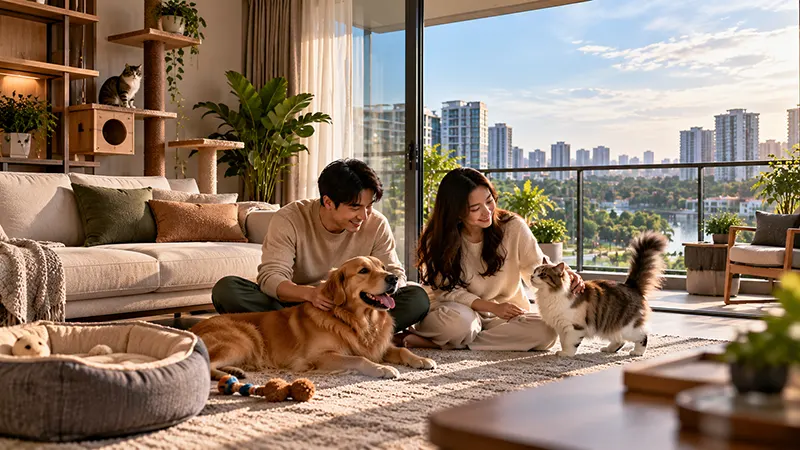
Make Your Home Comfortable for Every Household Member
For many people, pets are part of the family. Dogs, cats, and other companion animals can bring enjoyment to everyday life, but they also influence how a home needs to be organised and maintained.
A property that suits people comfortably may require additional planning when animals are involved. Flooring, ventilation, storage, access to outdoor areas, and the arrangement of furniture can all affect how easily residents care for their pets.
Before purchasing a home, prospective owners should consider both the property’s physical suitability and the rules governing animals within the development. This helps establish realistic expectations before making a long-term commitment.
Understand the Space Your Pet Needs
Different animals have different requirements. A cat may benefit from vertical climbing spaces and quiet resting areas, while a dog may need room to move comfortably and regular opportunities for exercise outside the home.
Consider where your pet will eat, sleep, play, and rest without disrupting everyday household activities. Food bowls should be positioned conveniently, while litter trays or other designated areas need suitable locations that can be cleaned easily.
Storage is another important consideration. Food containers, grooming tools, leads, toys, and cleaning products should have organised places that remain accessible to owners but safe from curious animals.
The objective is not necessarily to find the largest possible apartment. It is to identify a layout that accommodates the animal’s needs while preserving comfortable living space for everyone.
Choose Materials That Are Easier to Maintain
Pets can influence the amount of cleaning required at home. Fur, muddy paws, accidental spills, and scratched surfaces may become part of regular maintenance.
Flooring that is easy to clean can be particularly useful. However, owners should also consider traction, comfort, and the needs of their specific animal. Slippery surfaces may be unsuitable for some pets, particularly those with mobility difficulties.
Furniture fabrics deserve similar attention. Materials that resist stains or allow straightforward cleaning may be more practical than delicate upholstery.
Regular grooming, prompt cleaning, and suitable protective covers can also help maintain the interior. Buyers should check the actual finishes provided with the property before deciding whether additional protection or furnishing changes will be necessary.
Review Pet Policies Before Making a Purchase
A property’s suitability for animals depends on more than its layout. Applicable laws, development rules, and management arrangements may influence which animals are permitted and what responsibilities owners must follow.
Prospective buyers researching Solano Grand should verify the relevant pet policies and any applicable requirements before assuming that their preferred animal can live there.
They should also consider practical matters such as lift access, shared corridors, waste disposal, and the need to keep communal spaces clean. Responsible ownership includes preventing avoidable disturbance to neighbours and ensuring that animals are handled safely in shared areas.
Where a policy is unclear, obtaining confirmation from the relevant authority or management representative is preferable to relying on informal assumptions.
Plan Daily Walks and Outdoor Activities
Dogs generally require regular exercise and opportunities to relieve themselves, although the amount varies by breed, age, health, and individual temperament.
When evaluating a neighbourhood, identify suitable walking routes and nearby green spaces. Consider pedestrian safety, shade, access to water, and the practicality of taking an animal outside during hot or rainy weather.
Those considering a home in Bukit Panjang can research the available parks and pedestrian routes around the intended location. Buyers should confirm the actual walking distance and check any rules governing pets in public spaces.
Outdoor access should be treated as part of the daily routine rather than an occasional convenience. A route that seems manageable during a weekend visit may feel less practical when repeated several times a day.
Assessing Pet-Friendly Living Around Wynwood Grand
For buyers exploring Wynwood Grand, it is useful to examine both the property’s confirmed layout and the surrounding Woodlands environment.
Think about where pet supplies could be stored, whether the living area offers sufficient room for the animal, and how easily residents can reach appropriate outdoor spaces. Households with cats may prioritise quiet resting areas and secure windows, while dog owners may focus more heavily on convenient walking routes.
Before purchasing, verify the development’s applicable rules and any restrictions relevant to the intended animal. Do not assume that a landscaped area or shared facility automatically permits pets.
Buyers should also investigate nearby veterinary services and other relevant amenities. Their availability, operating hours, and actual accessibility should be confirmed rather than inferred from general descriptions of the neighbourhood.
Keep Indoor Air and Hygiene Under Control
Pets can introduce odours, loose fur, and additional cleaning requirements. Good housekeeping helps maintain a pleasant indoor environment.
Regularly washing bedding, cleaning food bowls, and maintaining litter areas can reduce unwanted smells. Appropriate ventilation may also help, depending on the property’s design.
Pet owners should store cleaning chemicals, medicines, and small objects securely. Electrical cables and fragile items may need protection, especially when young or curious animals are present.
These measures support a safer environment while making routine maintenance easier.
Prepare for Changes in Your Pet’s Needs
Animals may require different arrangements as they age. A young pet that enjoys climbing may eventually need easier access to resting areas, while an older dog may benefit from less slippery flooring and fewer obstacles.
Flexible furniture arrangements and accessible storage can make these transitions easier. Owners should also consider how future veterinary appointments, care arrangements, and household changes could affect their routines.
Conclusion
A pet-friendly home combines suitable indoor space, manageable surfaces, practical storage, and convenient access to appropriate outdoor areas. It also requires attention to development rules and the responsibilities of keeping animals in a shared residential environment.
By checking the property’s specifications and researching the surrounding neighbourhood, buyers can make a more informed decision. The right home should support the wellbeing of both people and pets without creating unnecessary difficulties for neighbours or household members.

