
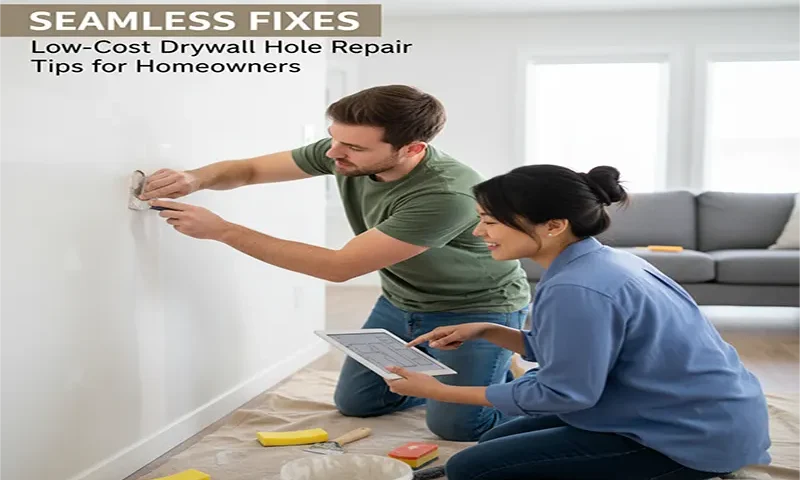
We have all been there: a stray doorknob, a missed picture frame, or a minor accident leaves an unsightly hole in the wall. While the instinct is often to call a professional, the truth is that the vast majority of residential drywall holes can be repaired for less than the cost of a single contractor’s trip fee.
Drywall repair is less about “fixing” and more about patience. An invisible patch is 10% material and 90% technique. By following a structured approach to filling, taping, and feathering, you can achieve a finish that is completely indistinguishable from the surrounding wall.
1. The Triage: Choosing the Right Repair Method
Not all holes are created equal. Using the wrong repair method is the fastest way to turn a small blemish into a large, messy hump on your wall.
| Hole Size | Recommended Repair Method |
| Tiny (Nail/Screw) | Lightweight spackle and a finger-wipe. |
| Small (Doorknob/Up to 2″) | Self-adhesive mesh patch + joint compound. |
| Medium (3″ – 6″) | The “California Patch” (Hot Patch). |
| Large (6″+) | Cut to studs, install wood backer, screw in new drywall. |
- The Tiny Fix: For minor nicks, a tiny dab of spackle is sufficient. Press it in, let it dry, and lightly sand it.
- The Small Fix: Self-adhesive mesh patches are inexpensive and create a strong base for your compound.
- The California Patch: This is the professional’s favorite for medium holes. You cut a square of drywall larger than the hole, score the paper on the back, and remove the gypsum core, leaving a paper “flange” that acts as your tape.
2. The “Pro” Tool Kit (Budget Edition)
You don’t need a professional-grade arsenal. For under $50, you can assemble a kit that will last you for years:
- 4-inch and 6-inch drywall knives: Don’t use a putty knife; the wider the blade, the easier it is to “feather” the edges.
- Sanding sponge (medium grit): Much easier to control than loose sandpaper.
- Utility knife: For squaring off jagged edges.
- Joint Compound (All-Purpose): A small pre-mixed tub is perfect.
- Mesh tape: Never use paper tape for small DIY repairs; mesh tape is self-adhesive and far more forgiving.
3. The Secret Sauce: Feathering
The biggest mistake DIYers make is failing to “feather” the edges of their patch. If you simply fill the hole and leave a hard, thick edge, the light will hit it and reveal the patch instantly.
Feathering means thinning out the joint compound as you move away from the center of the hole. Your goal is to create a very wide, shallow dome that blends perfectly into the existing wall.
- Apply your compound in thin layers.
- Use your 6-inch knife to pull the compound out and away from the patch.
- Each layer should be wider than the last. You might end up with a patch that is 10 inches wide for a 3-inch hole. This extra width is the key to invisibility.
4. Texture Matching & Painting
Matching the surrounding wall is the final hurdle. If your wall has orange peel or knockdown texture, do not try to replicate it with a brush. Use a spray-can texture product from the hardware store.
- Practice: Always test the spray on a piece of cardboard first to dial in the nozzle pressure.
- Priming: This is non-negotiable. If you paint directly over your patch, the joint compound will absorb the paint differently than the surrounding wall, causing “flashing”—a dull spot that ruins the finish. Apply a quality primer to the patch area first to seal it.
5. Common DIY Mistakes to Avoid
- The “Hump”: Stop over-filling the hole. It is better to do three thin, flat coats than one thick, bumpy coat that will take hours to sand down.
- The “Cracked Edge”: If your patch is cracking at the edges, it’s because you didn’t overlap the patch enough with the surrounding drywall. Remember: the patch needs a solid base to grip.
- The “Sanding Disaster”: Do not sand down to the tape or the patch material. You are sanding the compound to make it flat, not scraping away your work.
The 60-Second Clean-up: How to Minimize Dust
Drywall dust is the bane of the DIYer. Before you start, tape plastic sheeting over the doorway of the room. Use a damp sponge for the final sanding passes instead of dry sandpaper; this prevents dust from ever becoming airborne. Finally, use a HEPA-filter vacuum to clean the floor—standard vacuum filters will just blow the fine dust right back into the air.
Drywall repair is a foundational home maintenance skill. By mastering the art of the “California Patch” and perfecting your feathering technique, you gain the ability to maintain your home’s aesthetic without the recurring costs of professional service calls. With a little practice, your patches will become invisible, and your confidence in DIY maintenance will grow.

