
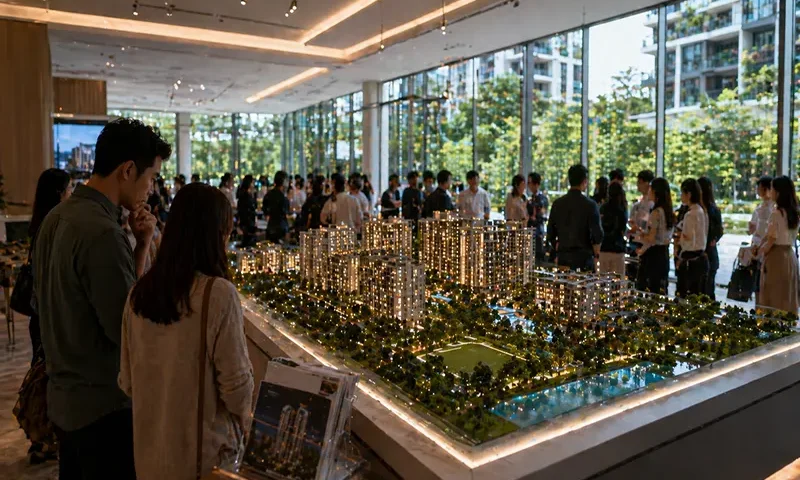
In Singapore’s property market, the spotlight is usually on launch day activity—queues, booking rates, and first-week sales performance. But experienced agents and investors know something different: the most meaningful demand often appears after the initial hype fades.
This is known as second wave demand, and in 2026, it is becoming one of the most important patterns shaping real estate performance.
1. What Second Wave Demand Actually Means
Second wave demand refers to buyers who enter the market after:
- Initial launch momentum slows
- Early buyers have secured preferred units
- Pricing clarity becomes more established
- Market sentiment stabilizes
These buyers are typically more analytical, less emotional, and more focused on long-term value rather than launch excitement.
They often determine whether a project has lasting strength or just short-term hype.
2. Why First Wave Buyers Are Not Always the “Smart Money”
First wave buyers tend to be influenced by:
- Marketing intensity
- Fear of missing out (FOMO)
- Limited-time promotions
- Showflat experience
While early entry can secure good unit selection, it is not always driven by deep analysis of:
- Comparable resale value
- Long-term rental demand
- Micro-location strengths
- Supply competition nearby
This is why early demand alone does not fully represent a project’s true market performance.
3. Second Wave Buyers Are More Data-Driven
Second wave buyers typically enter after studying:
- Price per square foot comparisons
- Nearby competing developments
- Rental yield benchmarks
- Stack and layout efficiency differences
By the time they act, they have a clearer understanding of whether pricing is justified.
This makes second wave demand more stable and often more sustainable.
4. The Role of Price Normalization After Launch
After initial launch momentum slows, pricing expectations become more realistic.
This stage often reveals:
- True market absorption rate
- Genuine demand strength by unit type
- Which layouts are actually preferred
- Whether initial pricing was aggressive or balanced
In many cases, second wave demand increases when buyers feel pricing has stabilized and risk is better understood.
5. Micro-Location Clarity Improves Over Time
At launch, buyers often rely on projections and marketing materials. But as time passes, real-world clarity emerges.
Second wave buyers benefit from:
- Visible traffic patterns
- Actual noise levels
- Real accessibility experience
- Nearby development progress
This ground-level clarity improves decision accuracy significantly.
6. Why Some Projects Depend Heavily on Second Wave Buyers
Not all developments sell out immediately—and that is not necessarily negative.
Projects that rely on second wave demand often:
- Target niche buyer segments
- Offer long-term positioning rather than hype-driven appeal
- Require more market education before absorption
- Compete on fundamentals rather than launch momentum
These projects can still perform strongly over time if fundamentals are solid.
Developments like Thomson Reserve often attract both early adopters and later-stage buyers who assess long-term livability and environmental quality before committing.
7. Layout and Stack Selection Become More Important Later
Second wave buyers tend to be more selective about:
- Facing direction
- Floor level premiums
- Unit orientation
- Internal layout efficiency
By this stage, they are not just buying into the project—they are optimizing within it.
This often leads to stronger demand for specific “better stacks,” even if overall launch momentum has slowed.
8. How Developers Manage Second Wave Demand
Developers actively plan for second wave absorption by:
- Phasing releases strategically
- Adjusting pricing tiers
- Holding back premium units
- Repositioning remaining inventory
The goal is to maintain steady absorption rather than relying solely on launch performance.
A well-managed second wave can extend sales momentum significantly beyond initial launch periods.
9. Rental Investors Often Enter During the Second Wave
A significant portion of second wave demand comes from investors rather than owner-occupiers.
These buyers focus on:
- Rental yield sustainability
- Tenant demand strength
- Entry price rationalization
- Long-term holding viability
They are less influenced by marketing and more focused on measurable returns.
This is why rental performance often stabilizes after second wave absorption begins.
10. Emotional vs Rational Demand Timing
First wave demand is often emotional, while second wave demand is more rational.
- First wave: excitement-driven, speed-focused
- Second wave: analysis-driven, value-focused
Both are important, but they serve different market roles.
A healthy property project typically shows a balance of both.
Boutique developments such as Amberwood at Holland often attract steady second wave interest due to their curated design and lifestyle positioning, which appeals to buyers who prioritize long-term liveability over launch hype.
Final Thoughts: Second Wave Demand Is the Real Market Test
In 2026, Singapore property performance cannot be judged by launch day results alone.
Second wave demand reveals:
- True pricing acceptance
- Real buyer confidence
- Long-term desirability
- Sustainable absorption strength
Whether evaluating large-scale developments or boutique residences like Thomson Reserve and Amberwood at Holland, the real question is not “How fast did it sell at launch?” but:
“Does demand remain strong after the excitement fades?”
In modern real estate, the second wave is often where the true market story begins.

