
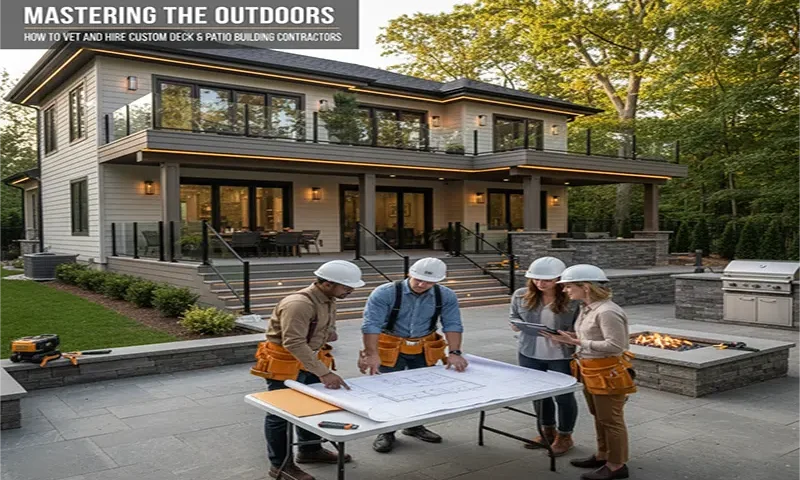
The “Outdoor Living Revolution” has fundamentally changed how we view our homes. A custom deck or patio is no longer just a wooden platform or a slab of concrete; it is a multi-zone outdoor living room. It requires the same level of architectural planning, structural engineering, and aesthetic finish quality as a primary kitchen or bathroom remodel. Because of this, the process of hiring a contractor has moved from “finding a guy with a hammer” to vetting a high-end project manager.
The “Digital Due Diligence”
In 2026, online reviews are your first line of defense, but they are also easily manipulated. You must move beyond generic star ratings to find the truth about a contractor’s performance.
Spotting the “Astroturf”
Be wary of reviews that sound like marketing brochures. If every review uses the same buzzwords (e.g., “amazing experience,” “best choice ever”) without specific details about the project, be skeptical. A genuine review often includes:
- Specific challenges: “They ran into a drainage issue but resolved it by…”
- Personnel mentions: “The crew leader, Mike, kept the job site incredibly clean.”
- Time context: Always look for reviews from the last 6–12 months. An award-winning contractor from 2018 may have lost their best crew in 2025.
Use the “Recent Project” filter on platforms like Google and Houzz. You are looking for a pattern of consistent excellence that spans the last year, not a cluster of reviews from several years ago.
What to Ask During the Site Visit
The site visit is your “Contractor Litmus Test.” How they conduct themselves on your property is a preview of how they will manage the construction phase.
The Litmus Test Checklist:
- Material Expertise: Ask them to compare high-end composite decking (like Trex or Azek) with exotic hardwoods (like Ipe). A true pro will discuss climate-specific expansion and contraction, UV stability, and long-term maintenance rather than just pushing the product with the highest markup.
- Permitting & Engineering: Ask: “How do you handle the local permit process, and do you provide engineered drawings?” A red flag is a contractor who says, “We usually don’t need permits for this.” That is almost always false for structural decks.
- Project Management: Ask: “Who is the day-to-day lead?” You want a single point of accountability. Inquire if they use a client-facing app to share daily progress photos, timeline updates, and change orders.
Review-Driven Vetting Checklist: Red Flags vs. Green Flags
When reading through past client testimonials, look for these indicators of a true professional.
| Feature | Red Flags | Green Flags |
| Communication | Difficult to reach; vague answers. | Proactive; uses a dedicated portal/app. |
| Site Management | Messy; debris left overnight; loud music. | Daily cleanup; safety-focused; respect for neighbors. |
| Scope Creep | Unexplained “surprises” that inflate costs. | Detailed change-order process; explains the “why.” |
| Punch List | Unresponsive after final payment. | Returns for minor fixes/adjustments promptly. |
The 5 Questions for Previous Clients
When a contractor provides you with a list of three references, do not just call them to ask if they “liked” the work. Ask these targeted questions to get the real story:
- “Did the project stay on the original timeline? If not, how did they handle the delays?” (Every project has delays; the difference is the professionalism of the response.)
- “How did they handle the mess?” (Ask if their yard/driveway was usable during the build.)
- “When an unexpected issue arose (e.g., soil stability or material shortages), how did they communicate it to you?”
- “Was the final cost of the project within 10% of the initial bid?”
- “If you had to build a deck again today, would you hire them back without hesitation?”
Understanding the Investment
The single biggest risk in outdoor living renovations is the “low-ball bid.” In the custom deck and patio world, the difference between a quote of $30,000 and $50,000 is almost always found in the details you can’t see: the depth of the concrete footings, the quality of the hidden fasteners, and the structural lumber grade.
Pro Tip: Insist on an itemized contract. A single-page document with a total price is an invitation for future disputes. A professional contract clearly outlines the scope, the material brands, the payment milestones tied to finished phases, and a clear warranty.
The “perfect” contractor is more than a builder; they are a partner in design who respects your budget and your home’s aesthetic. Never feel pressured to sign a contract during the initial consultation. The best builders know their value and will welcome your due diligence. By trusting the data from recent, detailed reviews and verifying references through targeted questions, you can move forward with confidence, knowing your new outdoor space is built to last.

