
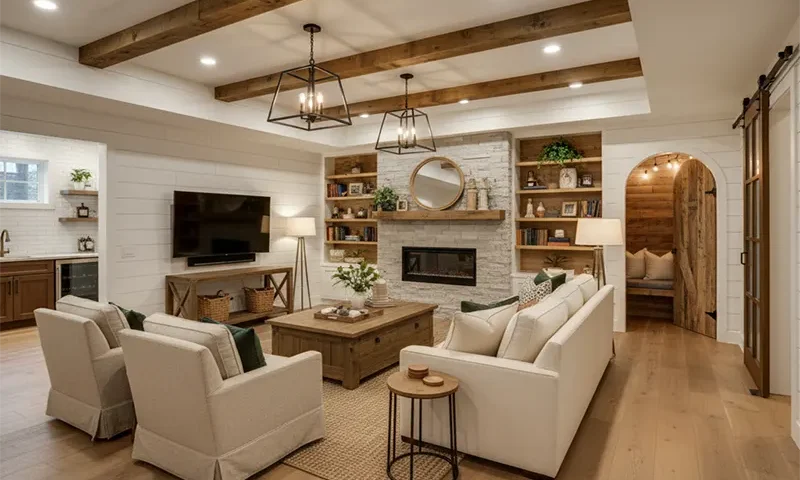
For many homeowners, the basement is the final frontier—a storage graveyard of holiday decor and unfinished projects. However, the basement holds the highest potential for adding square footage and value to your home. In 2026, the Modern Farmhouse aesthetic remains the gold standard for these spaces. Why? Because it strikes the perfect balance between the warmth of a rustic retreat and the crisp, clean lines of contemporary design, ensuring your subterranean level feels like a curated extension of your main floor rather than an afterthought.
The key to a successful modern farmhouse basement is intentionality. We aren’t looking for “country kitsch” here; we are aiming for a sophisticated, airy, and functional living space that elevates the home’s overall character.
The Material Palette: Mixing Rustic and Refined
A modern farmhouse basement lives or dies by its textures. The goal is to introduce natural, aged elements while grounding them in modern finishes to prevent the space from feeling dark or dated.
- Rustic Textures: Use reclaimed wood sparingly. Instead of covering every wall, limit wood to a single feature wall or as ceiling beams to add architectural interest. Shiplap, when used, should be installed horizontally with tight gaps, painted in crisp white or soft greige, to provide clean lines.
- Modern Contrasts: This is where the “modern” half of the aesthetic takes over. Incorporate matte black hardware on doors and cabinetry to provide a sharp, graphic contrast to white shiplap. For countertops, opt for honed soapstone or white quartz to keep the look clean.
- Flooring: Skip the wall-to-wall carpet, which can feel dated and trap moisture. Instead, use polished or stamped concrete for a durable, industrial-chic foundation, softened by large, high-quality wool or jute area rugs.
Layout & Zone Concepts
A basement must be multi-functional to be truly valuable. Avoid the “box room” trap by creating an open-concept flow that mimics the main level of your home.
The Great Room Approach
Combine your main living area with a statement kitchenette or wet bar. This is the heart of the modern farmhouse basement. Use a high-contrast palette—think matte black cabinetry paired with white subway tile backsplashes and a rustic wood floating shelf. This area should look intentional, not like a temporary snack station.
The ‘Flex’ Zone
Don’t let your basement be a one-trick pony. Incorporate “flex” spaces by using movable furniture or glass-paned barn doors. This allows for:
- The Sophisticated Home Gym: Use rubberized flooring disguised by heavy-duty mats, and keep equipment stored behind closed cabinetry.
- The Guest Suite: By placing a bedroom and bathroom in a quieter corner, you create a private retreat that feels like a boutique hotel, utilizing shiplap wainscoting in the bathroom to maintain the farmhouse vibe.
Lighting the Subterranean Space
The biggest challenge in any basement is light. Abandon the standard “fluorescent grid” approach and embrace a layered lighting scheme.
- Recessed Lighting (The Wash): Use high-output LED recessed lights to provide a consistent, ambient “wash” of light across the entire floor plan. Ensure they are spaced evenly for a shadow-free environment.
- Task Lighting: Place specific, modern-farmhouse style pendants over your wet bar area. Use under-cabinet LED strips in the kitchenette to highlight backsplash textures and create a workspace.
- Accent Lighting: Wall-mounted sconces—specifically in industrial-modern black metal designs—add warmth to hallways or flanking a fireplace. Strategic uplighting on any exposed structural beams or reclaimed wood accents adds depth and height to the room.
Pro Tip: Aim for a color temperature between 3000K and 3500K. This “warm white” is bright enough to feel modern and clean, but warm enough to keep the space from feeling clinical or cold.
The Finishing Touches
Accessorizing is where the “farmhouse” becomes “modern.” The secret is minimalism.
- Textiles: Use chunky knit throws, linen cushions, and soft, oversized rugs. These tactile elements make the basement feel like a sanctuary.
- Decor: Avoid generic “Home Sweet Home” signs. Instead, lean into vintage finds—a weathered wooden stool, a classic ceramic pitcher, or black-framed architectural sketches. Keep surfaces decluttered to maintain that crisp, clean aesthetic.
Modern Farmhouse: Dos and Don’ts Checklist
| Do | Don’t |
| Do use matte black accents for contrast. | Don’t buy matching “set” furniture. |
| Do prioritize large-format rugs for warmth. | Don’t over-clutter with kitschy signs. |
| Do utilize glass-paned interior doors. | Don’t use standard, cheap fluorescent tubes. |
| Do mix white paint with wood textures. | Don’t use dark, heavy drapery. |
Finishing a basement is one of the most significant investments you can make in your home’s long-term value. By blending the organic warmth of reclaimed materials with the sharp, clean lines of modern design, you create a space that transcends the “subterranean” feel. A well-designed modern farmhouse basement isn’t just extra room; it’s a cohesive, beautiful, and functional part of your lifestyle. Whether it’s a cozy movie night in the great room or a quiet morning in a flex-space corner, this renovation is about creating a home you never want to leave.

