
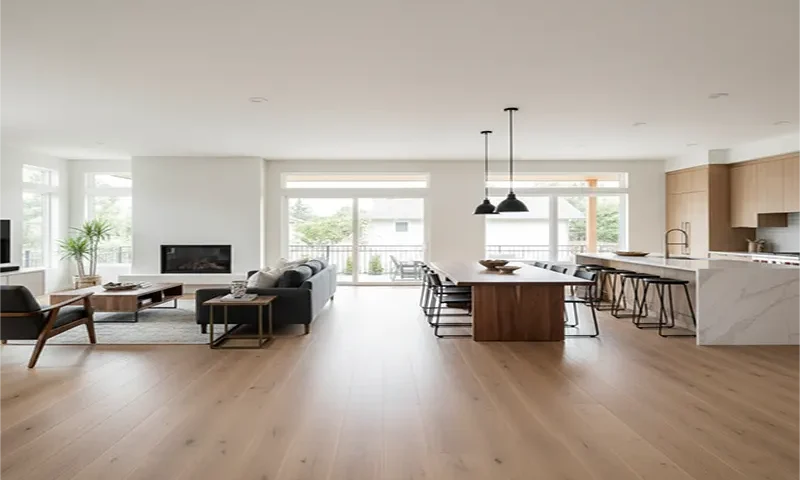
The ranch-style home is the unsung hero of modern residential architecture. With its single-story footprint and emphasis on horizontal lines, it is arguably the best architectural canvas for open-concept living. While early ranch designs often featured choppy, isolated rooms—a product of the 1950s—the 2026 design philosophy is breathing new life into these structures by embracing “warm minimalism” and intentional, fluid layouts.
The goal today isn’t to create a vast, sterile box; it is to maximize the ranch’s innate sense of connection to the land while creating a home that feels curated, textured, and deeply approachable.
Architectural Advantages: Why Ranches Excel
The ranch’s greatest strength is its simplicity. Because it is a single-level home, there are fewer structural constraints—like staircases or complex multi-story load-bearing points—that limit where you can open up a floor plan.
The horizontal length of a ranch allows for a linear flow that is inherently intuitive. When you remove non-load-bearing walls between the kitchen, dining, and living areas, you aren’t just gaining square footage; you are honoring the original design’s horizontal nature. The key is right-sizing the opening. Instead of removing every partition, focus on creating clear “sightlines” from the front entrance through to the rear windows, which anchors the space in natural light.
Zoning Without Walls
In an open ranch plan, the challenge is preventing the space from feeling like a vast, undefined void. You must define zones through subtle design cues rather than physical barriers.
1. Furniture Anchoring
Your furniture should do the heavy lifting of architectural definition. A large, low-profile sectional sofa positioned with its back to the kitchen immediately signals the beginning of the “living zone.” Floating cabinets or a console table placed behind the sofa provide a soft edge, creating a transition zone without obstructing light.
2. Visual Delineation
- The Rug Layer: Use rugs to act as “area rugs for rooms.” A large, high-texture wool rug under the living area furniture, and a different (but complementary) texture under the dining table, acts as a visual floor-plan within the larger space.
- Ceiling Treatments: Don’t forget to look up. You can define zones using architectural details like exposed beams, a dropped bulkhead, or even a change in ceiling treatment (such as beadboard in the dining area vs. smooth drywall in the living space).
- Unified Flooring: To maintain that crucial feeling of length, keep your flooring consistent. Using the same wood or large-format tile throughout the kitchen, dining, and living areas emphasizes the horizontal flow of the ranch and makes the home feel significantly larger.
The 2026 Material Palette: Earthy and Layered
We are moving decisively away from the high-contrast, cool-toned minimalism of the past. The 2026 ranch aesthetic is defined by “warm minimalism”—a style that prioritizes serenity but welcomes the “lived-in” feeling of natural materials.
- The Base: Start with a palette of creamy whites, soft greige, or warm taupe.
- The Texture: Introduce depth through organic finishes. Natural stone fireplace surrounds, warm chestnut or light oak wood tones, and linen upholstery provide the necessary contrast without the starkness of black-and-white.
- Accents: Instead of harsh black metal, look for patinated brass, bronze, or blackened iron. These softer metals add a sense of history and handcrafted quality to modern fixtures.
Before & After Layout Strategy
| Before: Traditional Ranch | After: Modern Open Flow |
| Enclosed kitchen with narrow doorway | Integrated great room with visual flow |
| Formal, unused dining room | Multi-functional dining/kitchen zone |
| Dark, isolated living room | Airy living space with outdoor connection |
Lighting as a Design Tool
In a ranch, lighting is the “glue” that holds your zones together. Abandon the standard grid of uniform recessed cans. Instead, use a layered approach:
- Ambient: Low-glare recessed lights set to a 3000K (warm white) temperature.
- Task: Pendant lights—perhaps in organic, sculptural shapes—hung low over the kitchen island to anchor that space.
- Mood: Wall sconces flanking a fireplace or a piece of art add intimate, human-scale lighting that makes a large open room feel cozy after dark.
The Indoor-Outdoor Connection
Ranch homes were designed to interact with the yard. The pinnacle of the modern ranch renovation is the seamless transition between the living room and the outdoors. Installing a wide sliding glass door or a folding window wall doesn’t just add light—it essentially doubles your living space when the weather permits. By aligning the indoor floor level with an exterior deck or patio of the same height, you dissolve the boundary between “inside” and “nature,” a hallmark of the 2026 biophilic design movement.
Transforming a ranch house into an open-concept sanctuary is about balance. It’s about achieving the clarity of minimalism while retaining the warmth and soul of a home. By focusing on intentional zoning, organic materials, and a commitment to horizontal flow, you can take the best features of the classic ranch and elevate them for modern life. Start small—by anchoring a zone with a rug or updating your lighting—and you will find that your home feels not just bigger, but inherently more peaceful.

